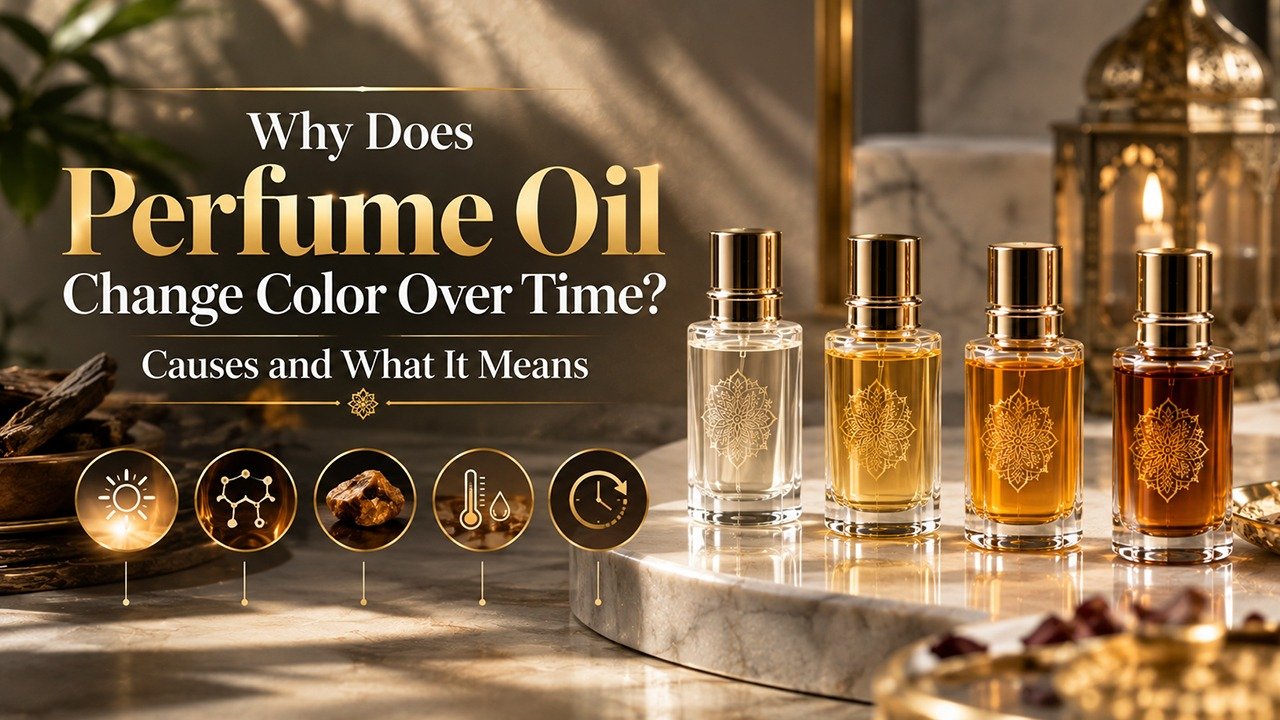
Why Does Perfume Oil Change Color Over Time? Causes and What It Means
Have you ever looked at a bottle on your shelf and noticed its shade turned darker over time? This sudden change often confuses fragrance lovers. Many people worry that a darker shade means the scent has gone bad or lost its strength.
However, color shifts are usually a natural reaction caused by light, air, and plant ingredients working together inside the bottle. Understanding these shifts helps you protect your favorite scents and enjoy them longer. In this guide, we will explore why perfume oil changes color, what it means for quality, and how to keep your bottles fresh.
The Science of Color Changes in Fragrance
When a liquid fragrance shifts from clear to amber or deep brown, natural chemical reactions are happening inside the bottle. These changes do not happen overnight; they occur slowly as the liquid interacts with its environment.
Oxygen and Oxidation
When you open a bottle, air gets inside. Oxygen reacts with the fragrance compounds in a process called oxidation.
- Top Notes Shift First: Light citrus notes like bergamot or lemon react quickly with air.
- Base Notes Darken: Rich ingredients like vanilla, amber, and patchouli darken as they oxidize.
- Air Gap Impact: As you use up the liquid, more air fills the empty space, which speeds up the reaction.
Natural Ingredients vs. Synthetic Molecules
Natural plant extracts contain active organic compounds that react to their environment much faster than synthetic laboratory molecules.
- Essential Oils: Pure jasmine, rose, and sandalwood oils naturally darken as they age.
- Vanilla and Vanillin: Vanillin is a key sweet note in many scents. It turns dark brown or even deep red when exposed to air and light, though the scent remains rich and pleasant.
- Resins: Ingredients like oud and frankincense naturally thicken and turn darker over time.
Surprising Reasons Your Fragrance Shade Shifts
Beyond air and natural extracts, several daily factors alter the appearance of your collection.
1. Sun Exposure and UV Rays
Leaving a glass bottle on a sunny windowsill or dress table exposes it to ultraviolet (UV) radiation. UV light breaks down the molecular bonds in the scent. This reaction alters the color rapidly and can spoil delicate top notes.
2. Temperature Fluctuations
Warm rooms accelerate chemical reactions inside the bottle. Heat causes volatile elements to evaporate and combine in new ways, deepening the hue of the liquid.
3. Interaction with Base Carrier Oils
Unlike alcohol-based sprays, concentrated formulas use carrier bases like jojoba, fractionated coconut, or seed oils. Over time, these carrier oils age naturally, which adds a warm yellow or golden tint to the mixture.
Color Changes vs. Spoilage: What It Really Means
A shift in appearance does not automatically mean your product is ruined. Here is how to tell if your bottle is aging gracefully or if it has spoiled.
| Indicator | Normal Aging (Safe to Use) | Spoiled Formula (Time to Replace) |
|---|---|---|
| Color Shift | Turns golden, amber, or light brown | Turns murky, cloudy, or forms dark sludge |
| Scent Profile | Smells deeper, richer, or sweeter | Smells sour, vinegar-like, or metallic |
| Skin Feel | Smooth and moisturizing | Causes redness, itching, or feels sticky |
In regions with warm climates, such as when using perfume oils in Pakistan, temperature shifts can make these natural visual changes happen much faster. Storage in a cool place is essential.
Practical Examples Across Fragrance Types
Different fragrance profiles react uniquely as they age. Here is what to expect based on the scent family:
- Daytime Fresh Scents (Unisex & Women): Light floral and citrus scents (like lily or green tea) should remain clear or pale yellow. If a light citrus scent turns dark brown and smells sour, it has likely oxidized too much.
- Evening Warm Scents (Men & Unisex): Scents rich in vanilla, amber, or leather often turn dark amber or mahogany. This visual shift usually makes the scent smell richer and smoother rather than bad.
- Rich Oriental Scents (Men): Deep wooden notes like dark oud naturally darken over months. Collectors often prefer aged wood oils because the scent becomes deeper and lasts longer on skin.
Four Essential Rules to Protect Your Bottles
You can easily slow down color changes and protect your fragrance investment by following these simple storage habits:
- Keep Bottles in the Dark: Store your bottles inside their original boxes or in a closed drawer away from sunlight.
- Control the Room Temperature: Keep your collection in a cool, stable room. Avoid storing scents in hot bathrooms where shower steam creates frequent temperature spikes.
- Seal Lids Tightly: Always cap your bottle immediately after use to limit the amount of oxygen entering the container.
- Choose Dark Glass Packaging: Dark amber, violet, or opaque glass bottles block harmful light rays far better than clear glass.
If you are looking for long-lasting, beautifully crafted scents made with premium materials, explore the high-quality collection at Oud Al Meydan.
Frequently Asked Questions
1. Does a darker color mean my fragrance is stronger?
Not always. A darker shade usually means the ingredients have oxidized or aged. While vanilla and wood notes may smell richer as they darken, light citrus notes may lose their freshness.
2. Can sunlit bottles harm my skin?
If a bottle has degraded significantly due to intense sun exposure, oxidized compounds might cause mild skin irritation. Always test a small patch on your wrist first.
3. Why does my vanilla scent turn dark brown so fast?
Vanilla contains vanillin, an ingredient that naturally turns dark brown when exposed to light and air. This process is completely normal and does not mean the scent is ruined.
4. How long does a typical bottle last before changing color?
Unopened bottles stored properly can stay unchanged for 2 to 3 years. Once opened, natural shifts may begin within 6 to 12 months.
5. Should I store my bottles in the refrigerator?
A cool room or drawer is usually enough. Extreme cold or temperature changes from taking bottles in and out of a fridge can stress delicate formulas.
6. Does clear glass ruin liquid formulas faster?
Yes. Clear glass allows UV light to pass through easily, which speeds up color shifts and ingredient breakdown compared to opaque or dark glass bottles.
7. What should I do if my liquid looks cloudy?
If the liquid becomes cloudy, separates into layers, or forms sediment at the bottom, the formula has likely broken down and should be replaced.
8. Does temperature affect natural ingredients more than synthetic ones?
Yes. Natural extracts contain complex organic structures that react much faster to heat and air than stable synthetic compounds.
9. Why does the scent feel thicker when the shade darkens?
As light top notes evaporate over time, the heavier base ingredients remain behind, making the texture feel slightly thicker on your skin.
10. Can I stop the color from changing completely?
You cannot stop natural oxidation entirely once a bottle is opened, but keeping it in a cool, dark drawer will slow the process down significantly.
Conclusion
Understanding why your perfume oil changes color helps you care for your collection with confidence. A darker shade is usually a natural sign of aging, air exposure, or rich ingredients like vanilla and plant resins reacting over time. Storing your bottles in a cool, dark place away from direct sunlight will preserve their quality and keep your scents fresh.
Looking to expand your collection or create your own custom line? Explore our premium scents and private label options at Oud Al Meydan.
Latest Posts